Vesta Kroese

The 579th door
The 579th door
The 579th door
The 579th door

The 579th door

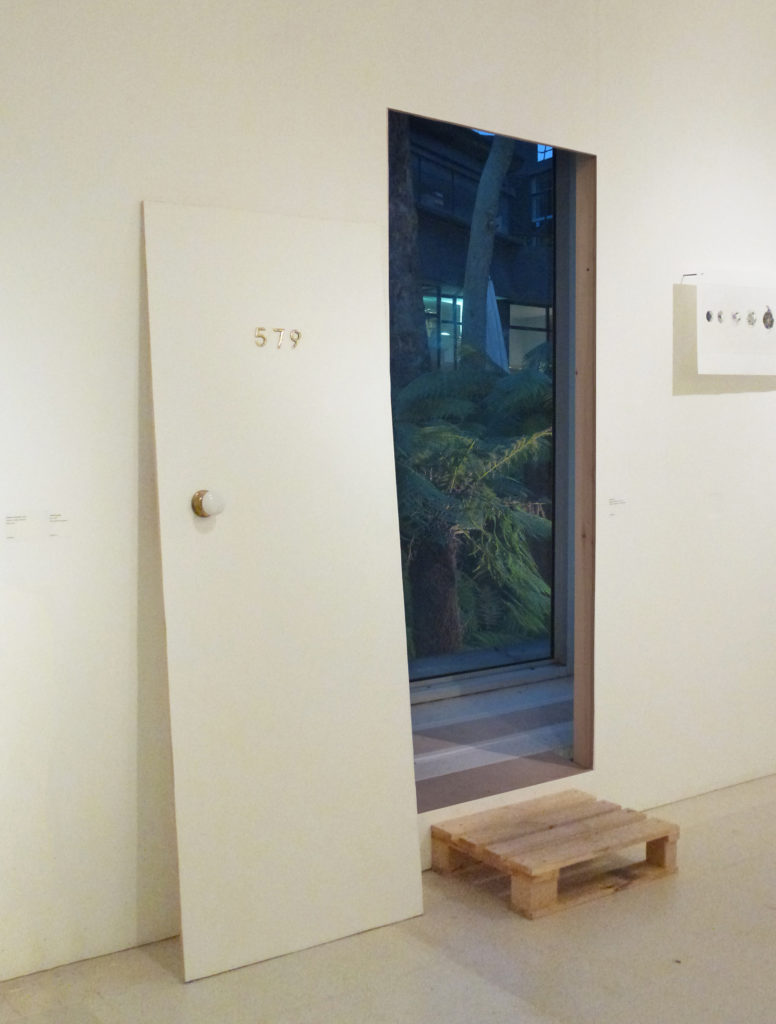
Door handle, door numbers, email invitation, children’s chairs, tulips, blankets, domestic an building lights, use of existing exhibition wall / glass facade and artificial palm tree garden.
120 cm in width

Instead of using the exhibition wall to present an artwork, an opening was created to show the space behind it. With the work, the attitude of the commercial art object vs the theory of relational aesthetics was tested. After counting all the doors of the building, the opening in the form of a door was given the number of that extra door. An email was send to all users of the building with an invitation to use the temporary space behind the door. The space between the ‘fake’ exhibition wall and the actual glass facade of the building was now accessible, putting attention to the artificial palm garden. Minimal props were added to make visitors feel comfortable to stay.

Exhibited at: WIP show, Royal College of Art, Darwin Building, London 2013

HIER / DAAR
HIER / DAAR
HIER / DAAR
HIER / DAAR
HIER / DAAR
HIER / DAAR
HIER / DAAR
HIER / DAAR
HIER / DAAR

HIER / DAAR

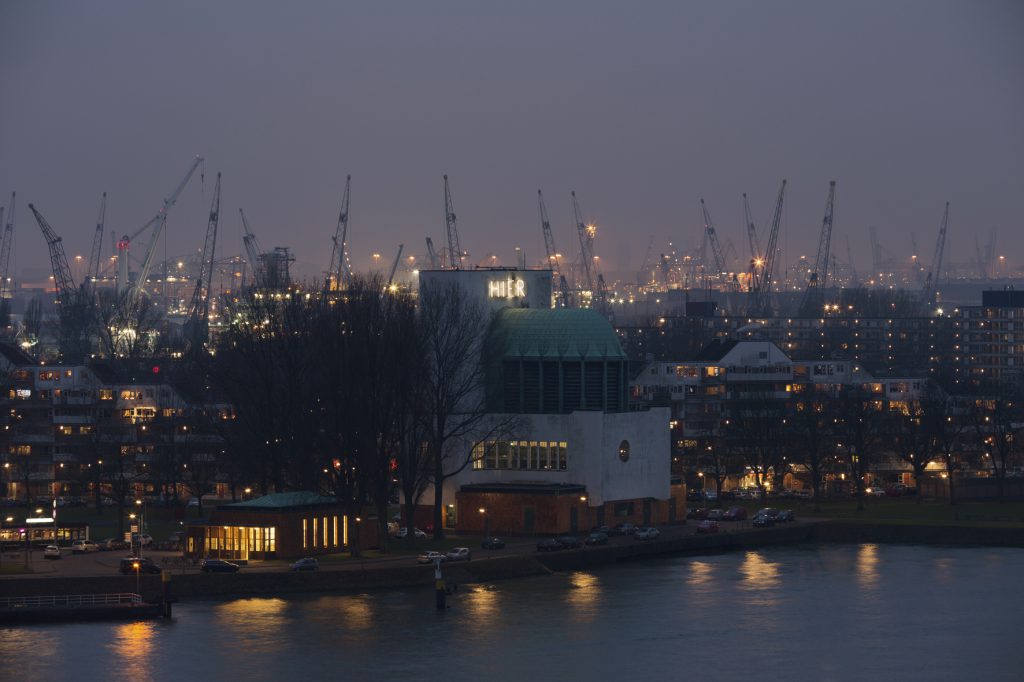
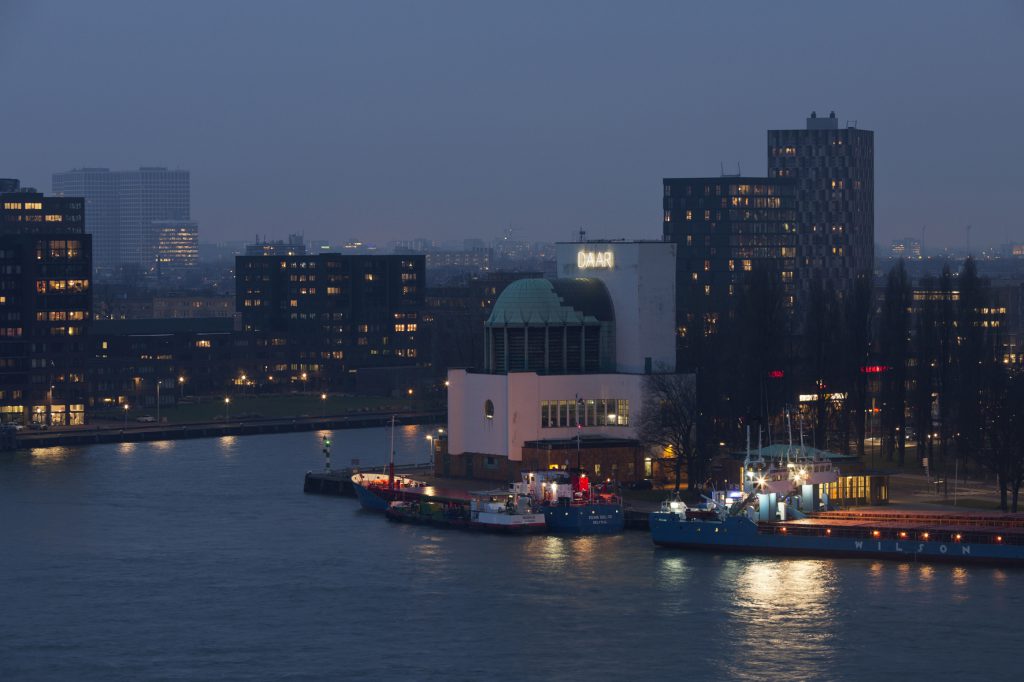
Interactive neon on 2 facing monuments, Rotterdam
2 x 9 m

Rotterdam has wrestled for years with the North – South divide where both sides of the city are used to functioning with different identities. The ventilation buildings are the visible ends of the underground Maastunnel. They are the only buildings on each side of the river that have an identical look and function, which was the main reason to place the artwork there.

This work combines our inner state of presence, with the physical, social and political reality of the North and South of Rotterdam. The words HIER (here) and DAAR (there) embrace the river and approach it like a central city square. When it starts to get dark, the neon turns on. They communicate with each other, when one side is ‘here’, the other is ‘there’. And one will never be for always ‘here’, nor ‘there’. They switch in an irregular interval.

Commissioned by: St. Downtownberaad, St. Kick, CBK Rotterdam and Pact op Zuid
Installed between 2011 and 2016
Exhibited at: Kunsthal, 2017
Photos, camera and edit by Christian van der Kooy

my one
my one
my one
my one

my one

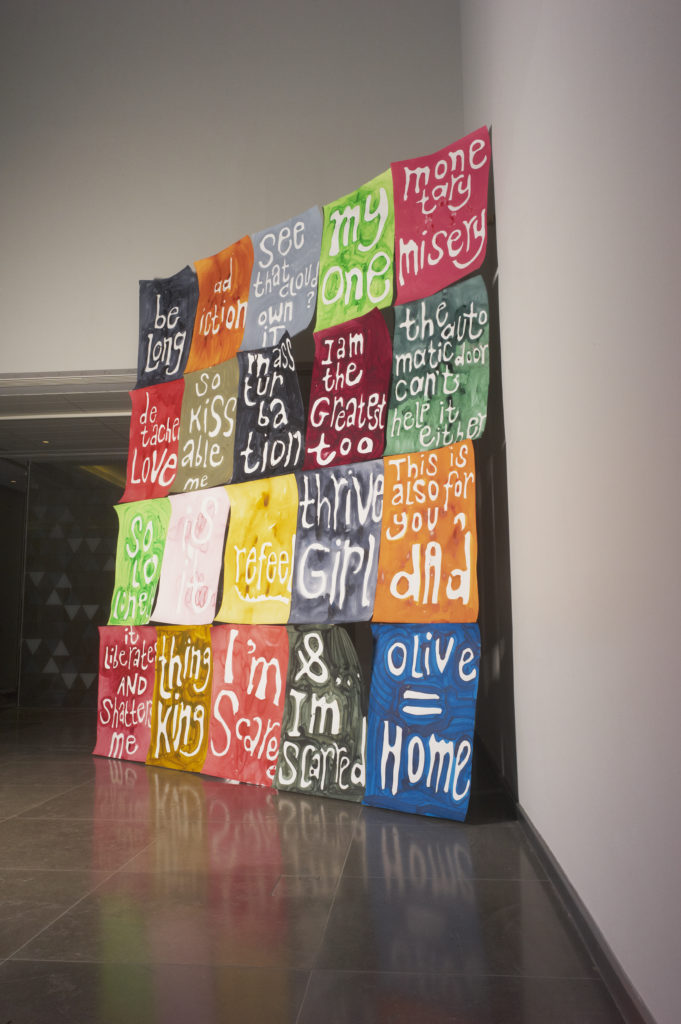
Acrylic on paper 
70 x 100 cm

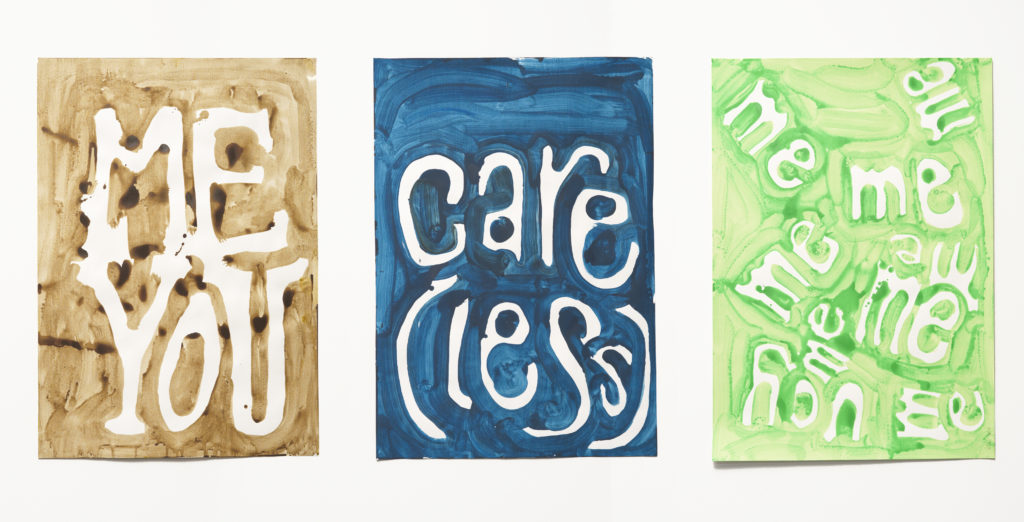
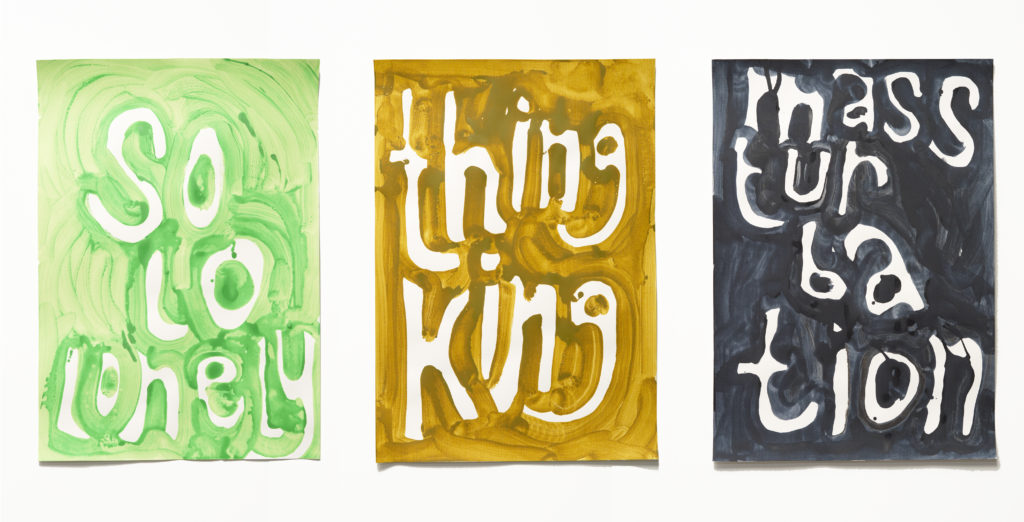
An installation of site-oriented paintings and chairs is the product of an alertness towards attitudinal shifts during a month long residency StudioRCA. The process of painting became an undercover activity questioning the social, political, educational and physical structures in the context of the Riverlight development. The work shows an ambiguous mix of antagonistic, joyous, observational, self-caring, agonistic, emotional and intellectual puns, wordplay and deliberate spelling mistakes.

Exhibited at: StudioRCA, London 2016
Residency at Riverlight Studio’s London 12/2015 – 01/2016
Publication MYONE, published by ErosPress (to download at contact page)

Unique Bond
Unique Bond
Unique Bond
Unique Bond
Unique Bond
Unique Bond

Unique Bond

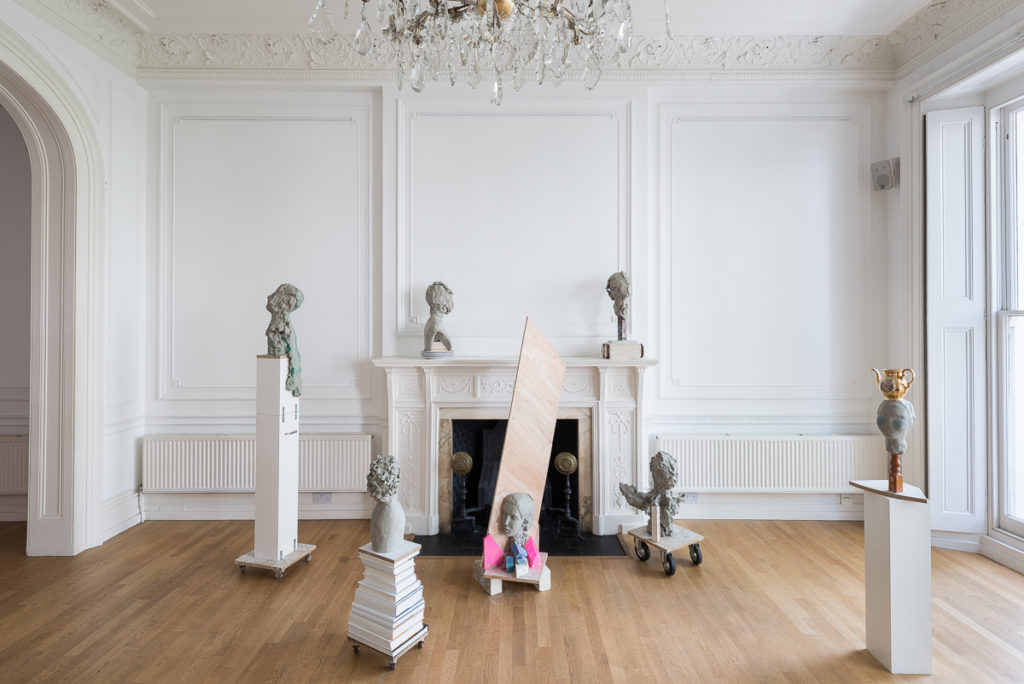
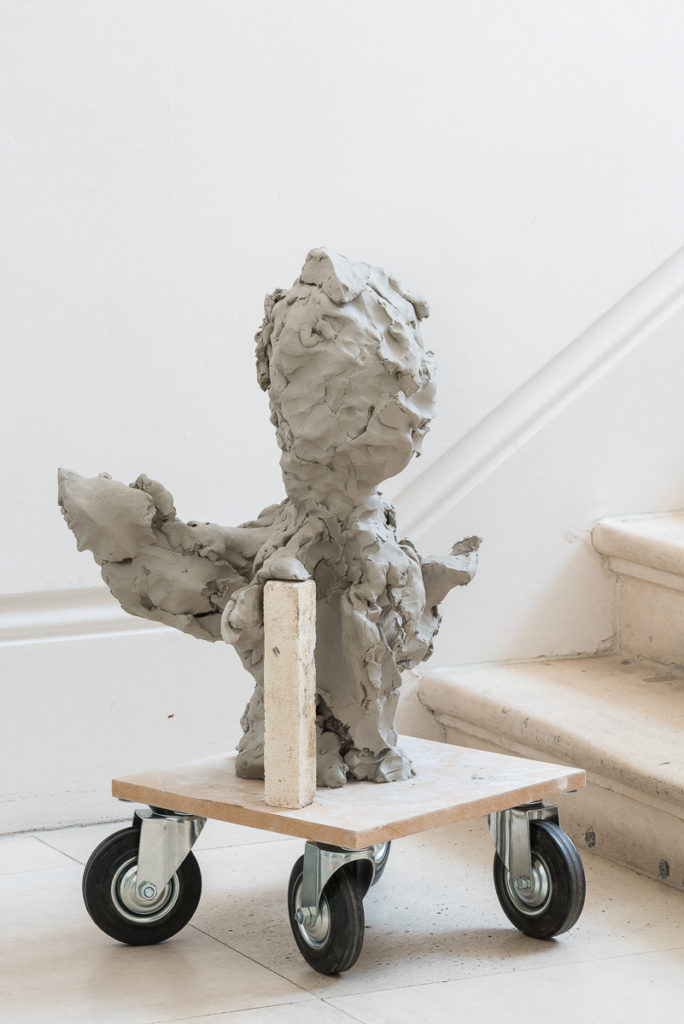
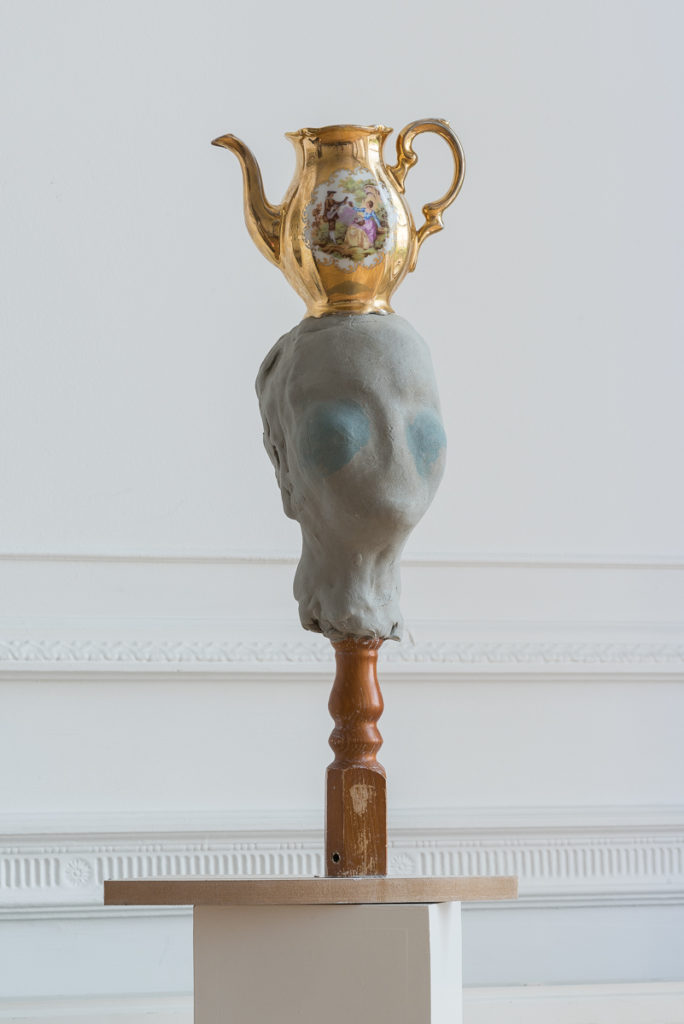
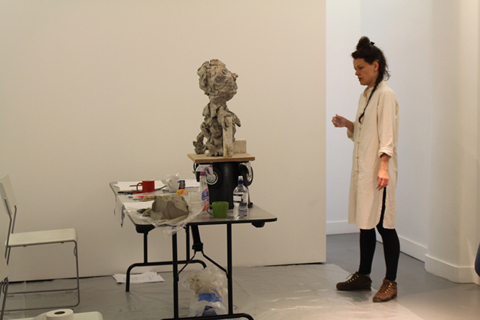
Clay, colour pigments, found objects and interviews with the team members of ACF.
Variable size

Based on historical commissioning of sculptural busts portraits, this work is a conceptual retake on that. For the anniversary of the Austrian Cultural Forum (ACF) life-size modeling clay busts are were developed of the team members. These were, however, not copied from physical appearance but rather from what one of the other team members tells about the person being portrayed. During one day each team member was interviewed by the artist, while they were hidden behind a wall. In this way there emerges a narrative depiction of the team that demonstrates a collective moment, a co-created development and which ultimately tells us about forms of communication and about different types of transmission.

Exhibited at: Austrian Cultural Forum London, June 2016
Curated by: Section.a
Photos by: Damian Griffiths

Monument for a transforming landscape, Terschelling

Monument for a transforming landscape, Terschelling

Eight hectares of pinecone forest, Terschelling

In The Netherlands almost all nature is cultivated. In this light we might consider it a sculpture. While an eight hectares forest had to be cut down we made use of this action by integrating an artwork, with the longing to make this ongoing cultivated ‘sculpture’ tangible. The process took place over the course of three years. The first year architectural installations with the materials of the trees were made in the forest. The second year 26 trees from the outline of the forest were kept (while the rest was cut down), each tree standing individually as a complete stranger in the landscape. They made it possible to get a real physical sense of the size of a forest at once. The dotted line of trees was visible from far on the horizon of the island.
During the landscape festival Oerol, a performative silent walk from tree to tree took place. An informal path arose, showing the outline of the old forest. From the last trees a couple of benches were created by chopping the tree in slices and bounding the trunks around the core.

2009 – 2011
Commissioned by Staatsbosbeheer and Oerol Terschelling
Aerial photo by Gerrit Bart Volgers, other photos by Wiesje Korf

WORK FOR GALLEYWAY
WORK FOR GALLEYWAY
WORK FOR GALLEYWAY

WORK FOR GALLEYWAY

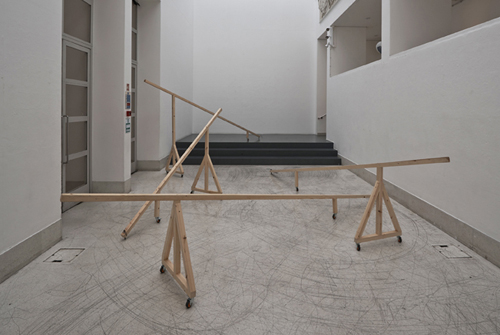
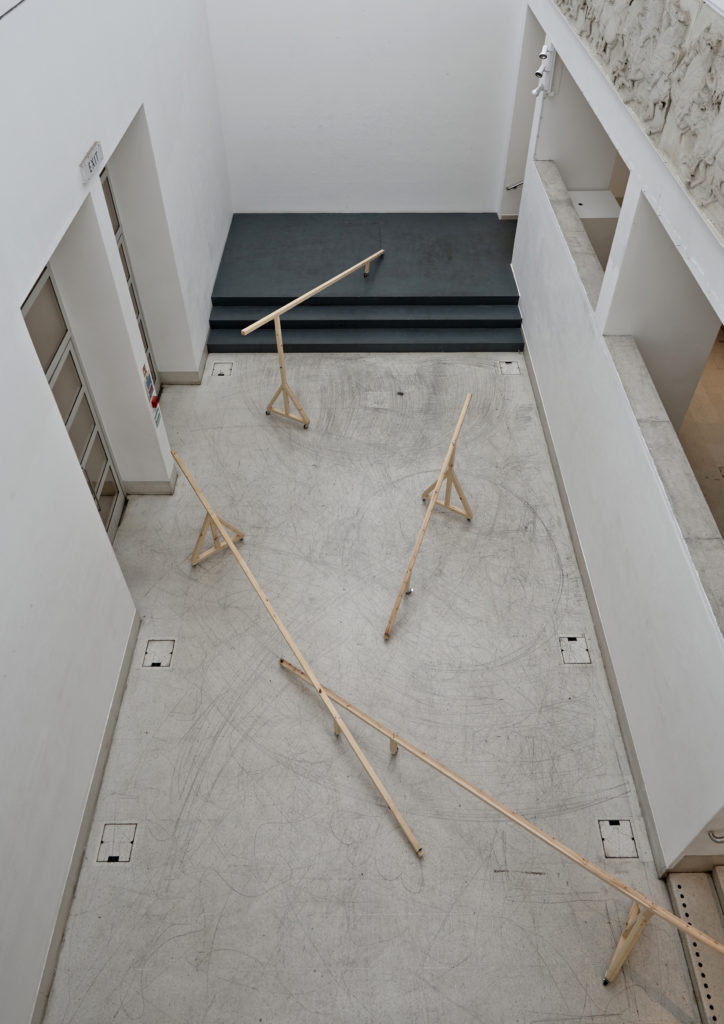
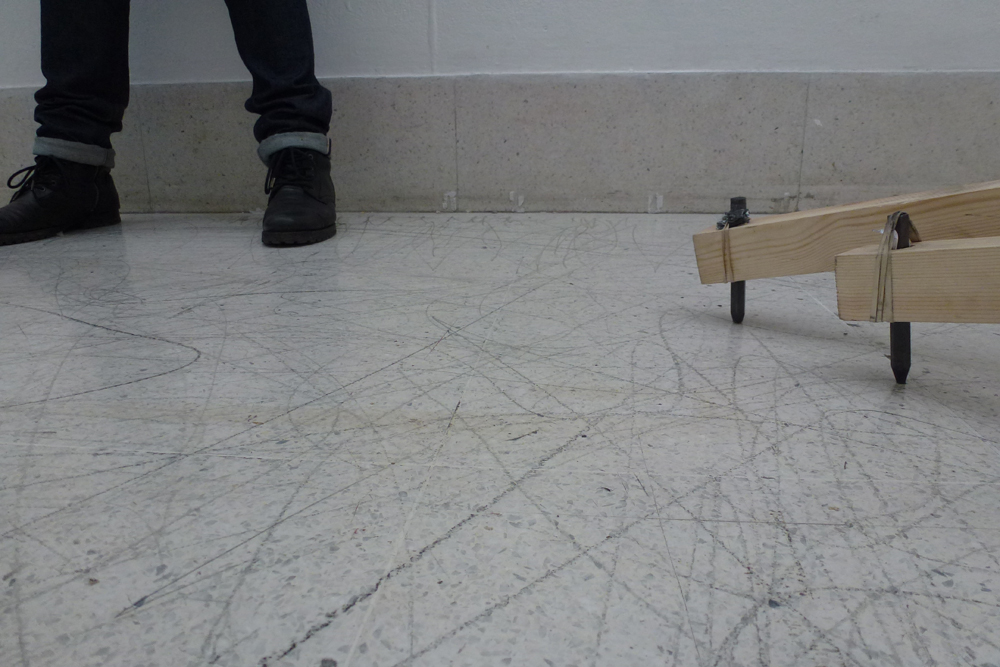
Wood, wheels, pencils, elastic band, movement of people in space
approx 400 x 120 x 65 cm each

The unique aspect of the exhibition venue which functions not only as a gallery but also as a passageway to get in and out of the building has been the trigger to develop this site-specific installation. The functional movement of bodies and language of barricades is translated into an aesthetic experience of space and time. 
The mobile sculptures leave – while being pushed out of the way – a pencil trace on the floor.

Exhibited at: Hockney Gallery, London 2013
In collaboration with: Suhee Kim, Photos by: Sun-Hak Kwon

Gender (in)convenience

Gender (in)convenience

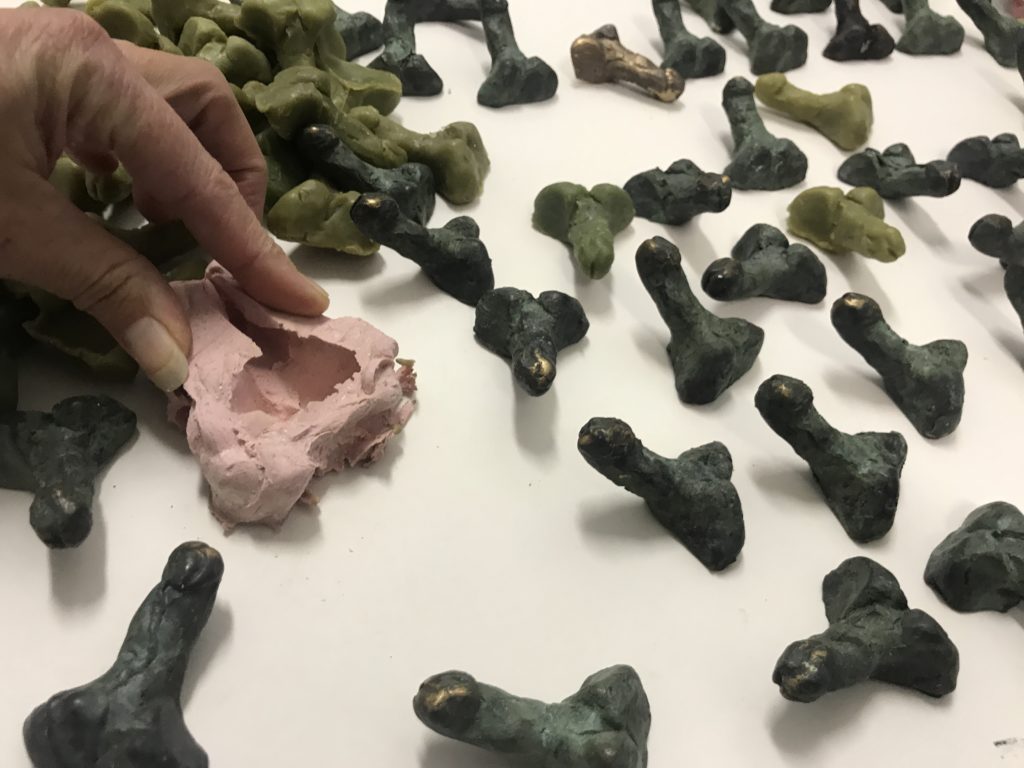
Bronze
3 x 3 x 4 cm

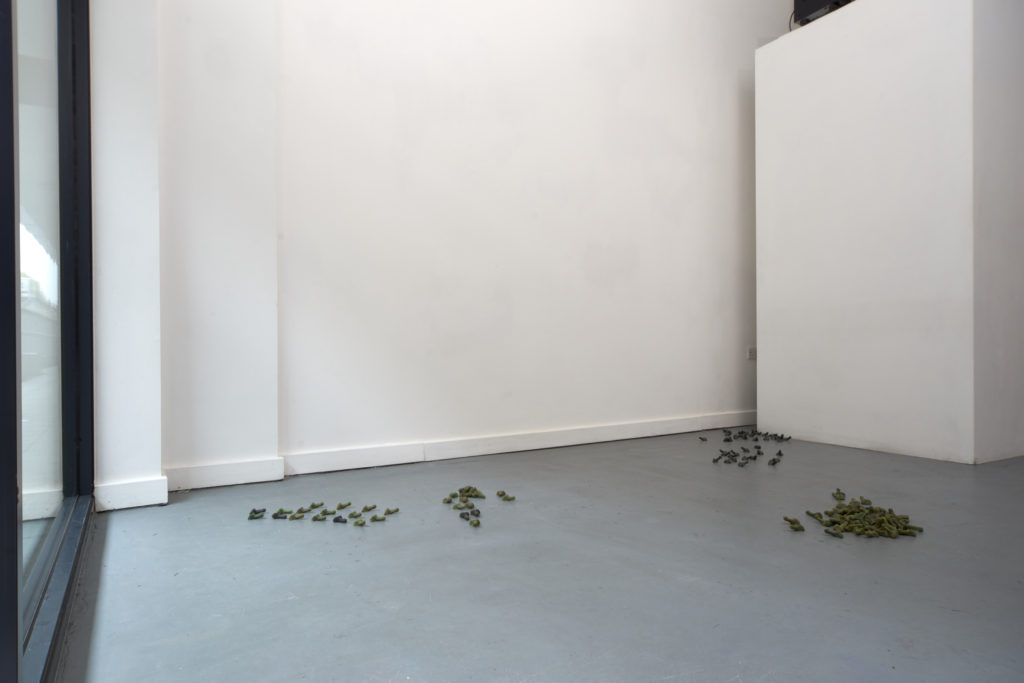
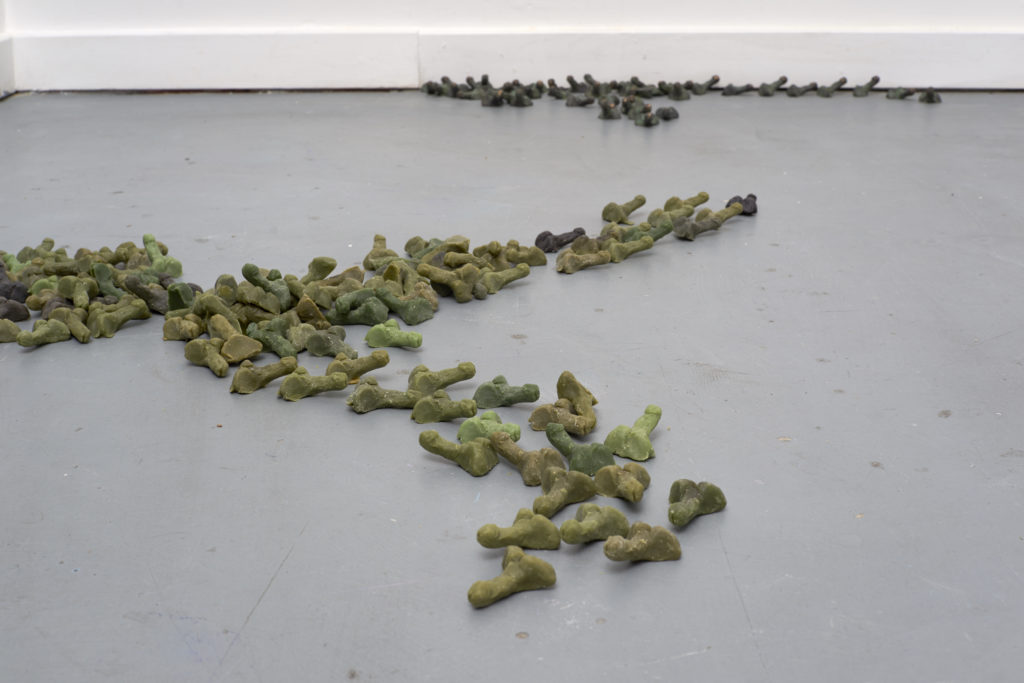
The origin of this work can be shown by a little story: While I was working in a London Bronze foundry we often made molds with silicone. This material stiffens only when you mix it with a pink liquid. While doing that it has a limited fabrication time. When you are too slow, the material hardens before you are ready. Sometimes we had mixed too much. I would hurry to make a small sculpture out of clay, to make a mold for it with this leftover silicone. One day I wanted to sculpt my vagina and got frustrated by the time pressure, so I made a quick penis instead.

The word ‘(in)convenience’ comes from the latin word ‘convenīre’ which means ‘to come together/to unite’. The stiffened silicone mold I made turned out to look like the vagina after all.

Exhibited at: News of the world, London 2016
Thanks to: Arch Bronze, London
Photos by: Sun-Hak Kwon
Pure Pain
Pure Pain
Pure Pain
Warning: Division by zero in /var/www/vhosts/vestakroese.com/httpdocs/cms/wp-content/themes/vestakroese/modules/flexible-content/flexible-content__multiple_images.php on line 10
Pure Pain

Pure Pain

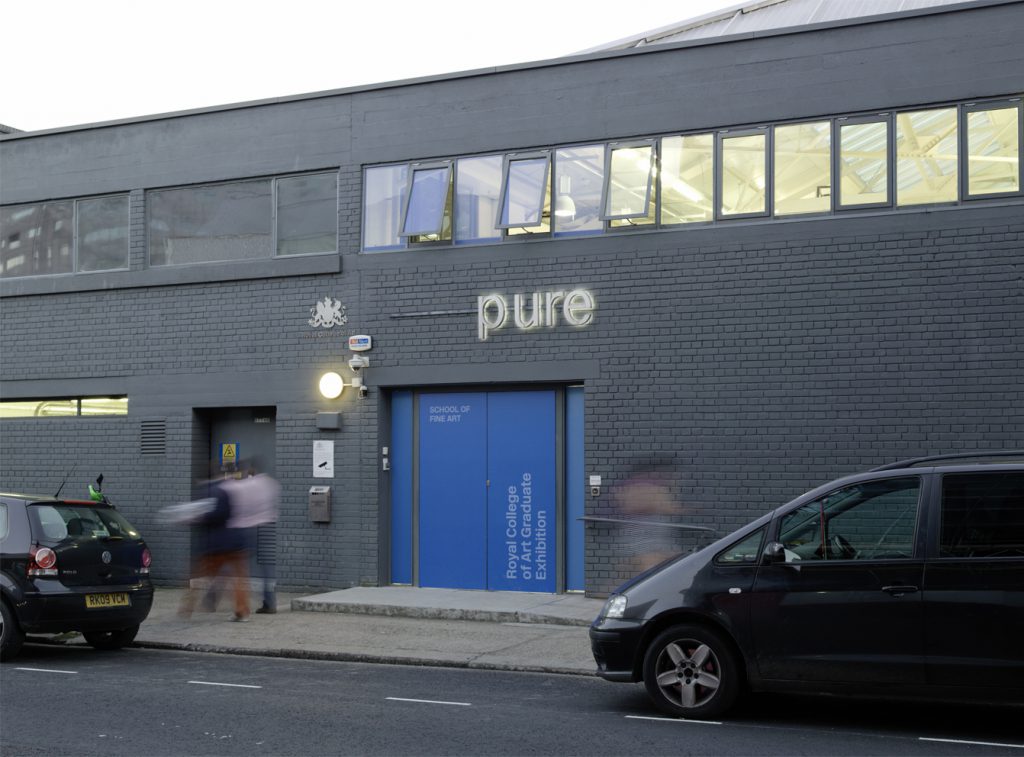
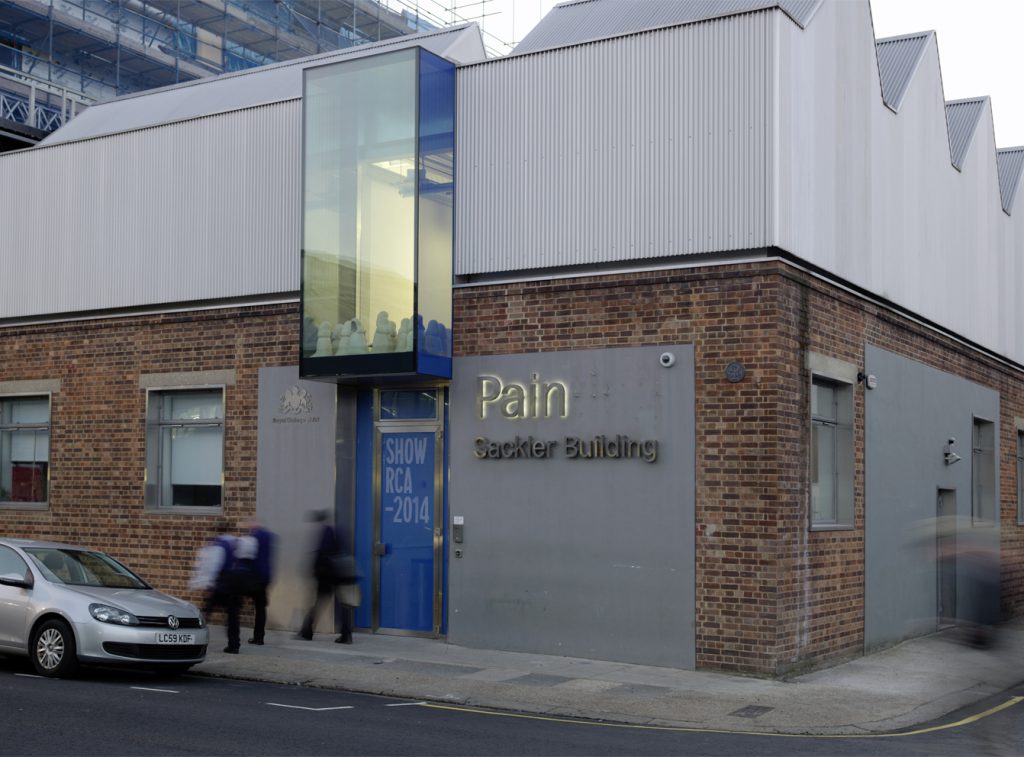
Removal of letters from ‘Sculpture’ and ‘Painting’ signs
approx 50 x 35 cm each letter

The authorities of the college are persuaded to let the letters from the signs to the college’s ‘Sculpture’ and ‘Painting’ departments be partially removed. It frames the building with the words ‘pure’ and ‘Pain’ instead.

Exhibited at: Degree show Royal College of Art, London (2014) and Google Maps Street view (online)
Credits movie: Camera: Delmar Mavignier Edit: Christian van der Kooy

13 WAYS OF LOOKING AT A GUITAR 

13 WAYS OF LOOKING AT A GUITAR 

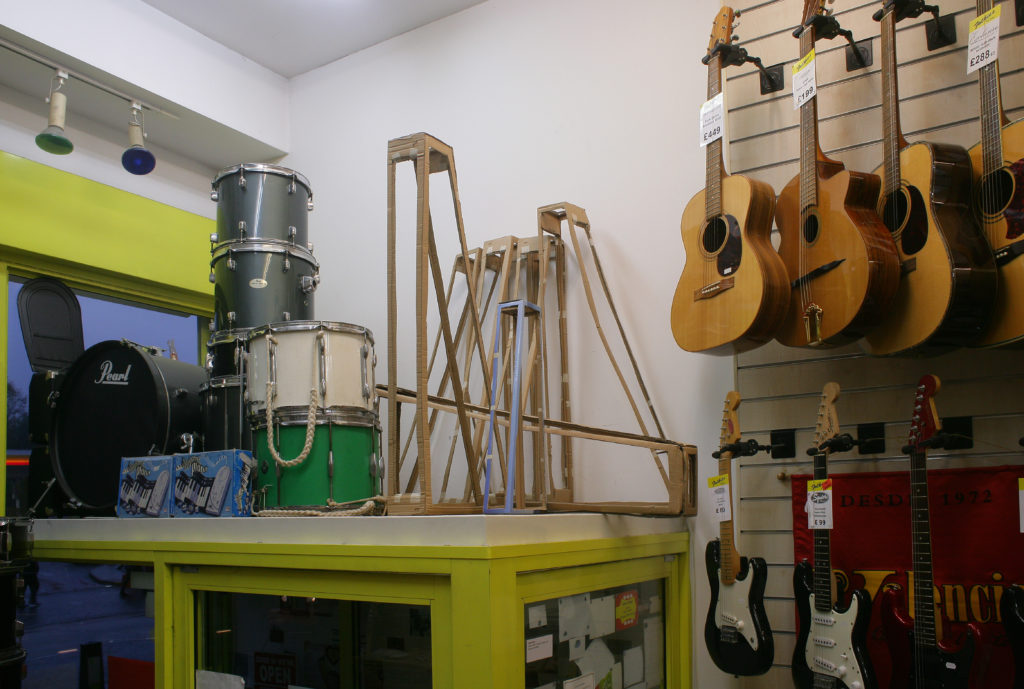
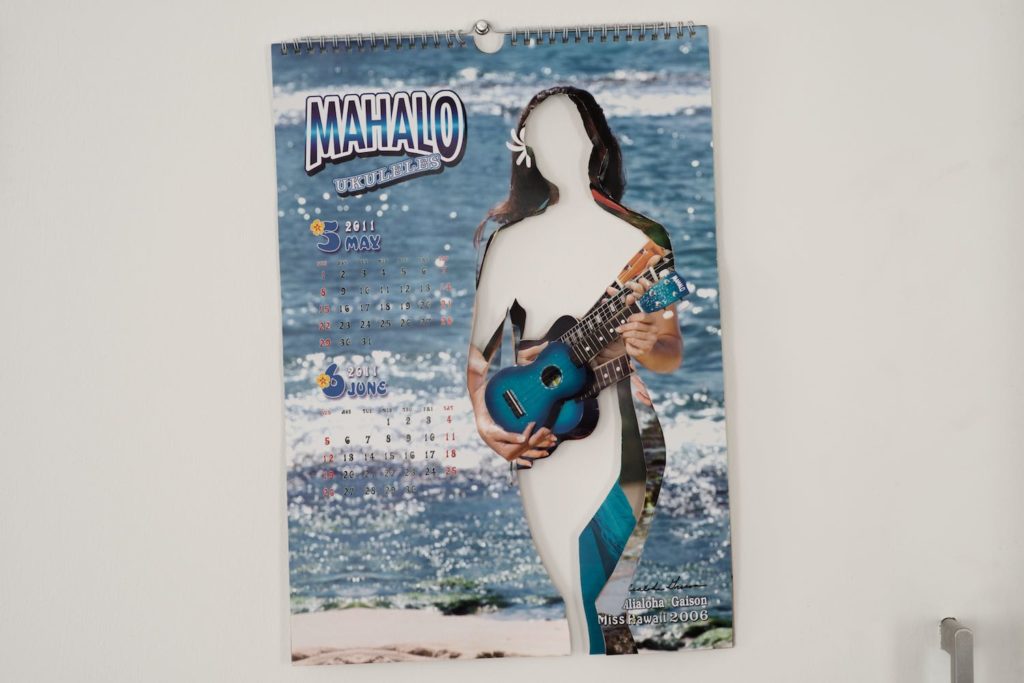
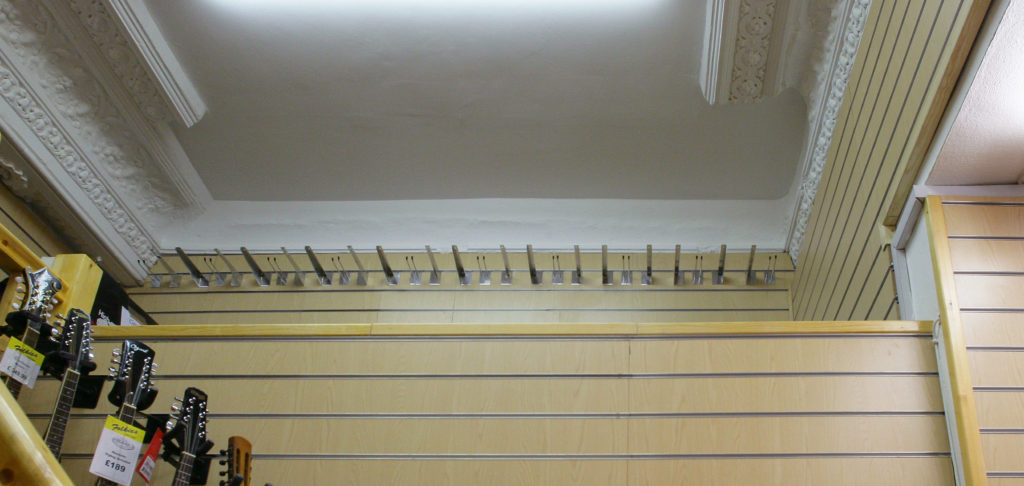
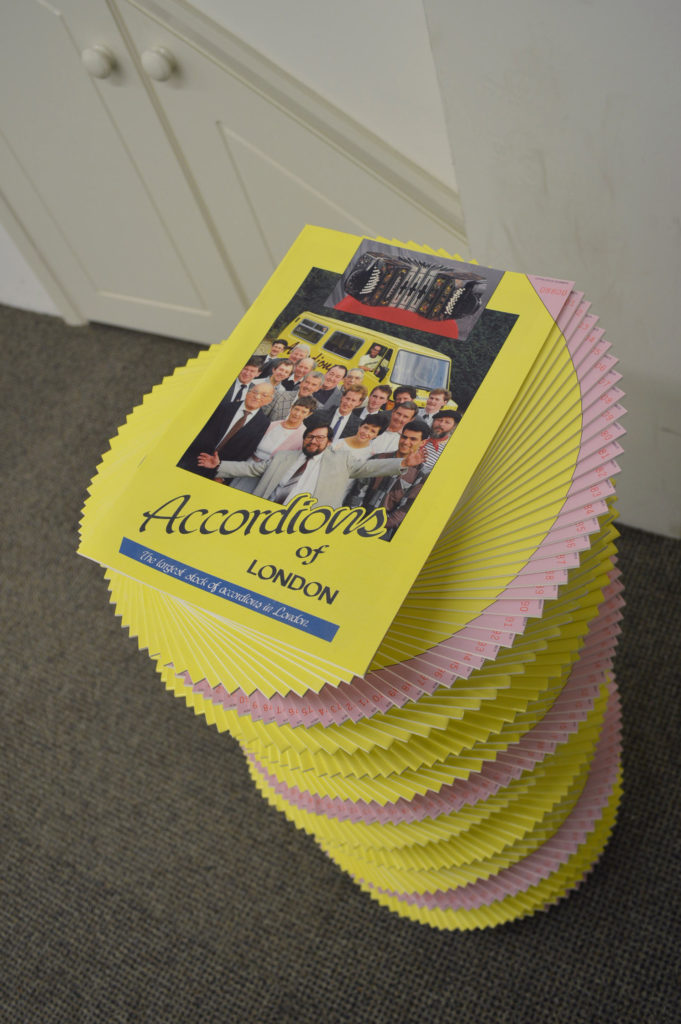
Cut cardboard guitar boxes, stamp with black ink on Folkies price tags, cut found Mahalo Ukuleles Calendar, framed photograph of artist, locked existing door, slat wall / -panel hooks / -panel brackets, plectrums, white tac, block of London plane, emptied out space, artworks, cut Epiphone poster, piece of broken wall, 5cm open door to storage room, guitars, 320 found Accordion Catalogues by John Leslie, exhibition plinths, amp – and keyboard stands.
For this occasion the basement was opened up to the public

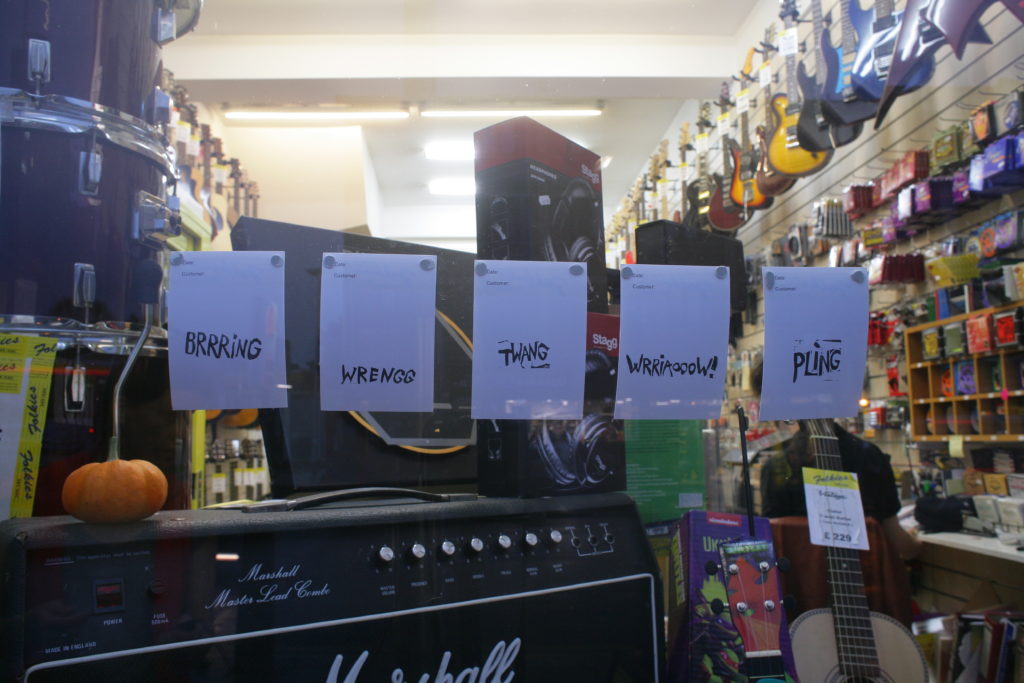
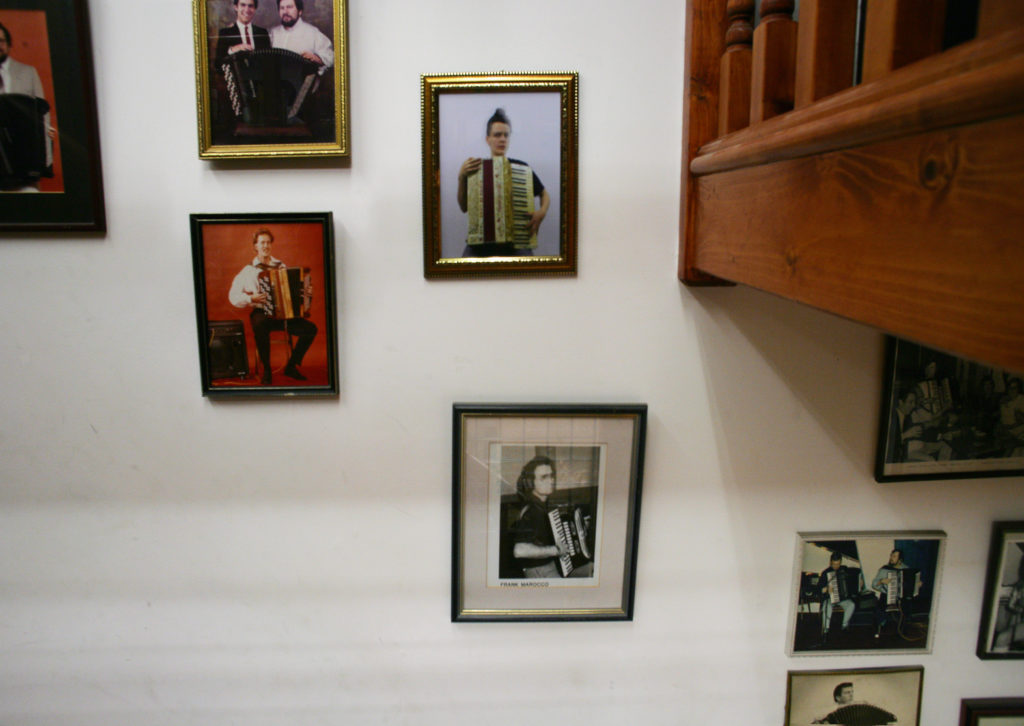
This installation is a playful collection of gestural artworks, in different media and sizes, installed and conceived all through the shop. As if the shop was a museum.
Folkies is a small privately owned music shop which started in the 1970s as the biggest collection of accordions in London. Now it sells and repairs all kinds of instruments, old and new. While functioning as a shop, the social and physical context of Folkies was used as studio space for 2 weeks, after that the exhibition opened for 9 days. Based on the concept of an object on display, a multitude of different artworks were created mixing an intuitive and reactive approach, with one that the cultural production of visual arts and music have in common; such as rhythm, improvisation, composition, silence, style, scale. The title refers to the Wallace Stevens poem ‘Thirteen ways of Looking at a Blackbird’ (1917) that can be seen as an exercise in perspectives and shift of meanings.

 
Exhibited as part of You Are Here, organised by Camden Arts Centre’s Front of House Volunteers 
The Mahalo Ukuleles Calendar is also exhibited at:Function room, curated by Jack Tan

(STUDY FOR ‘A WORDLESS CITY’) WHERE NO ONE SPEAKS, READS NOR …

(STUDY FOR ‘A WORDLESS CITY’) WHERE NO ONE SPEAKS, READS NOR …

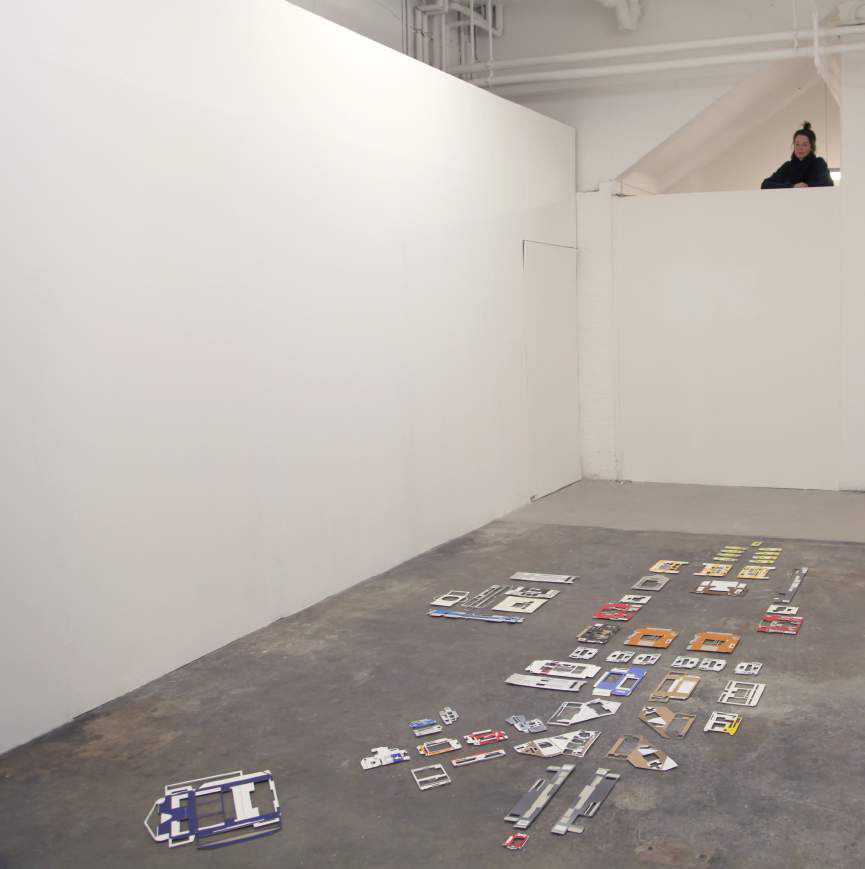
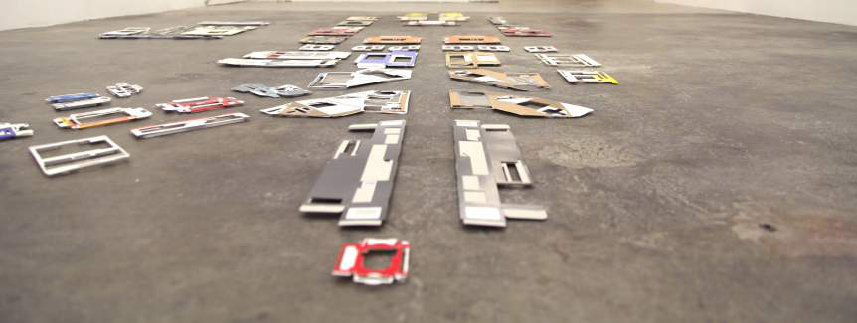
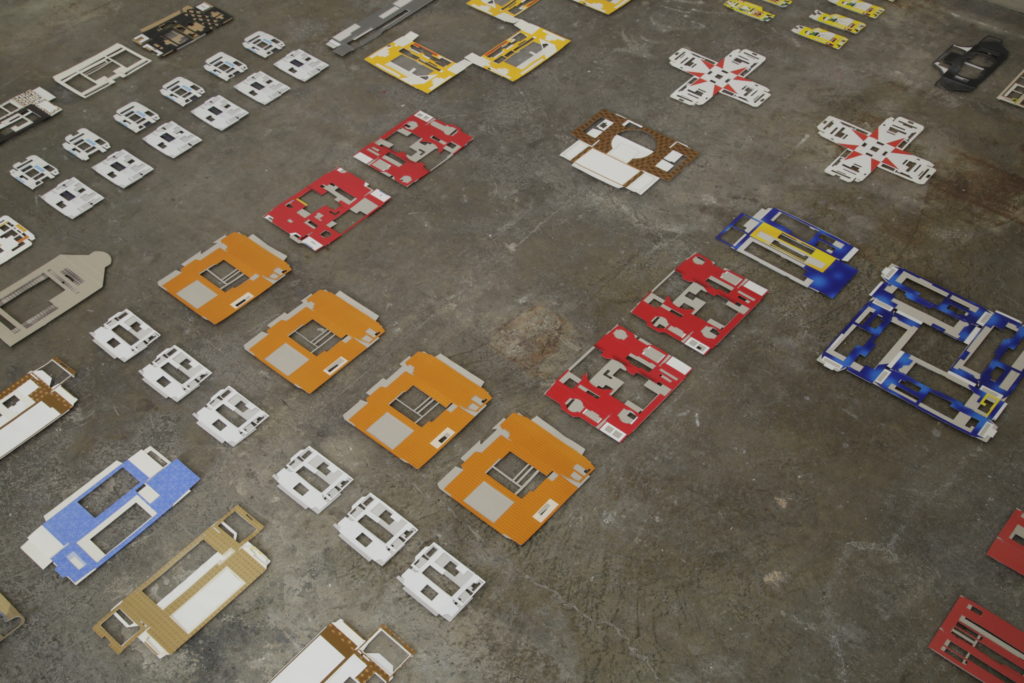
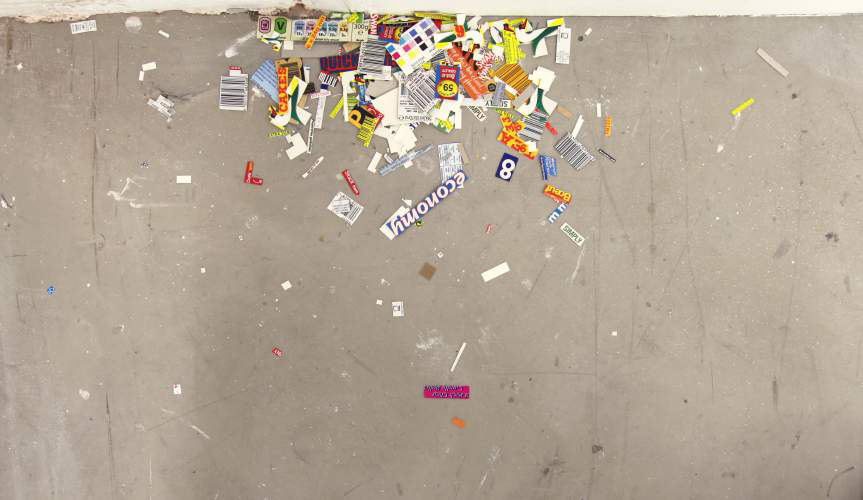
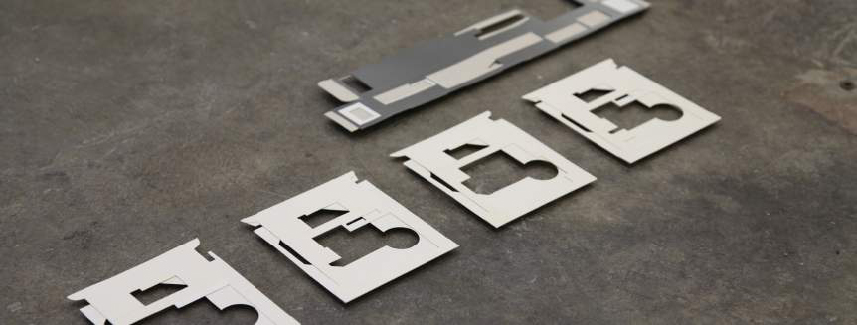
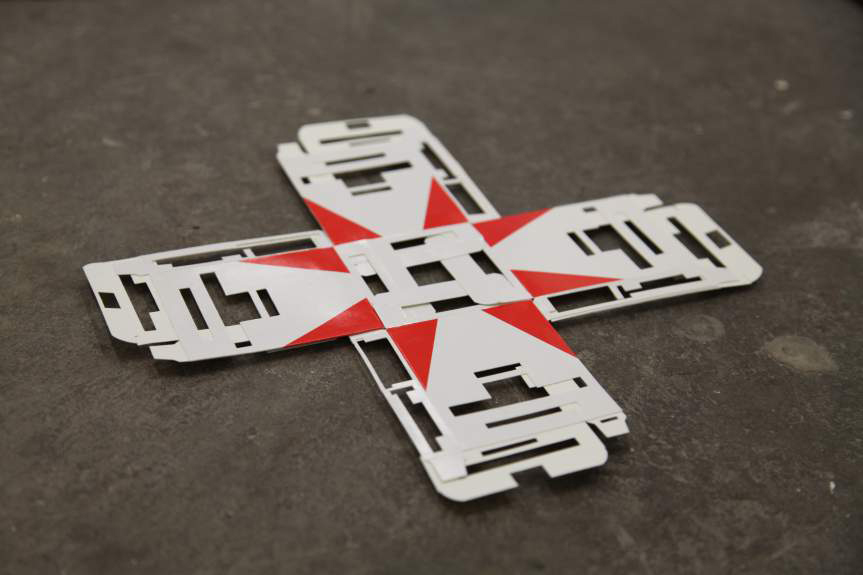
Cut packaging, dimensions variable 
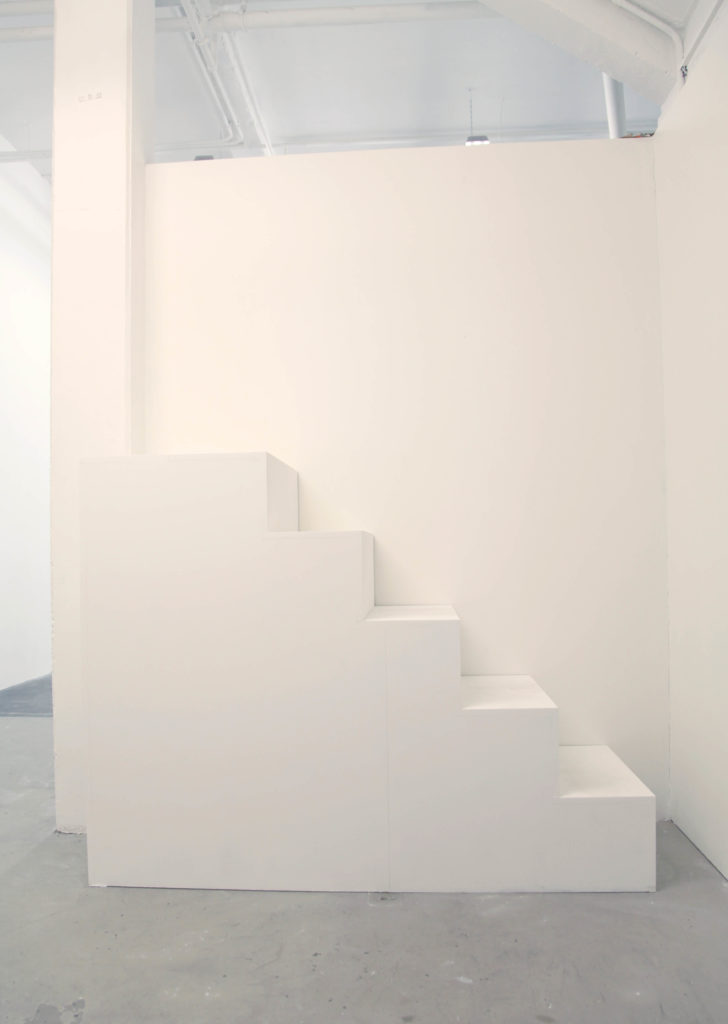
white stairs, 164cm x 126.5cm x 60cm

Cardboard cutouts of packaging have had all visual and written information removed. Trimming away the language and flattening the forms creates a collection of architectural models that have been arranged on the floor. The gallery forms the landscape and terrain on which the city rests.
On the other side of the wall is a staircase that allows the viewer to accentuate the bird’s eye view provided by the model. The stairs echo the architectural structure of the gallery including the underside of a set of stairs directly above them.

Exhibited at: Lychee One, London 2015
Curated by Angels Miralda

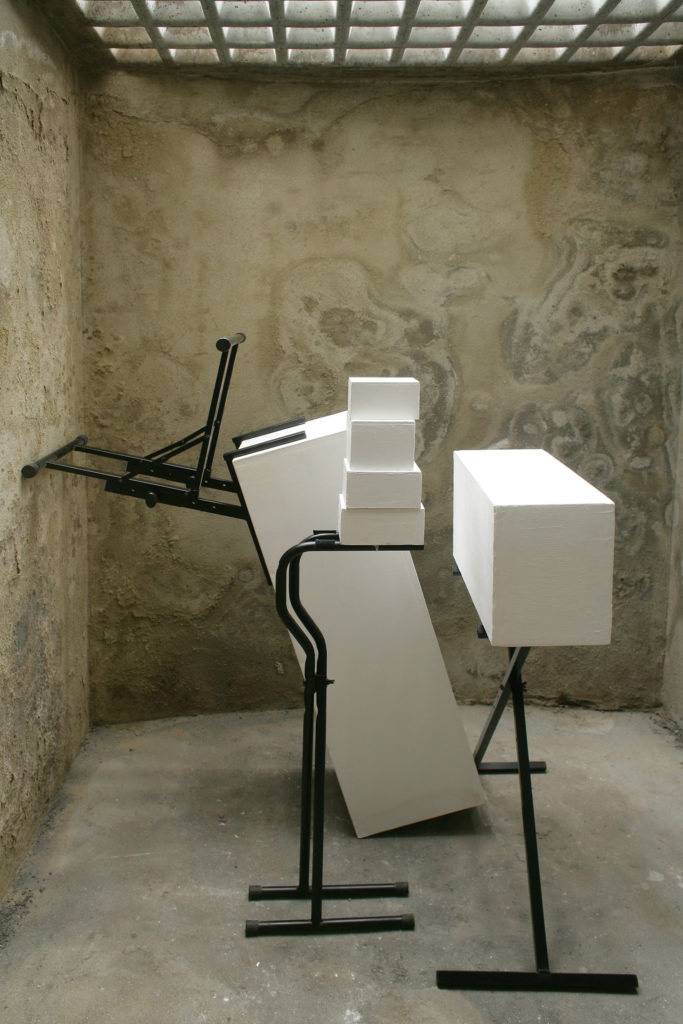
Illumination & ventilation (fluffery thing)

Gender (in)convenience

Pure Pain

my one

Unique Bond

WORK FOR GALLEYWAY

13 WAYS OF LOOKING AT A GUITAR 

(STUDY FOR ‘A WORDLESS CITY’) WHERE NO ONE SPEAKS, READS NOR …

HIER / DAAR

Monument for a transforming landscape, Terschelling

Vesta Kroese is an artist, educator and researcher currently residing in The Hague and working around Europe (including the UK). Her interest is on what it means to be human now, how we can develop inner and outer transformations. Mostly starting from her personal perspective, she is interested in the influence between the individual and the (capitalist) system in which we live. She studied Architecture at the Technical University Eindhoven (1999-2006) after which she ran many artistic projects in public space. Her longing for an international art basis made her study Sculpture at the Royal College of Art in London (2012-2014). Since 2012 she works as an in(ter)dependent artist, producing art for galleries, shops, institutions, private homes, nature and city spaces. Some of her projects are highly co-created with peer artists, architects and cultural institutions, based on interdependence and generosity. She has participated in art residency programs in The Netherlands, England, Germany and Spain.

Contact inquiries: vestakroese[at]gmail[dot]com
Visit at SeeLab: Duinstraat 55 The Hague or call +31 (0)6 1540 2941
Follow me on LinkedIn & Instagram

Download the first 9 pages of my artistbook MyOne (1.9mb pdf)

Subscribe to my newsletter (irregular): fill in form below

Questions around the artist legacy of Ad Kroese email hallo[at]adkroese[dot]nl or look here

Works on this site have been made possible by financial support of Stroom Den Haag, Mondiaan Fonds, CBK Rotterdam, ING collection, private investors, Royal College of Art London. Specifically Hier/daar: Deltafonds, St. Volkskracht, Stichting Kick, Stichting Downtownberaad, Deelgemeente Charlois, Deelgemeente Centrum, Stadshavens Rotterdam, DienstKunst en Cultuur, CBK Rotterdam and Pact op Zuid.


newsletter